COPAD GRANDS-LACS Shares Rapid Ebola Assessment
FIELD CONTRIBUTION · IFS AFRICA · EASTERN DRC
| As part of the ongoing outreach and engagement work connected to the emerging IFS Africa regional network, COPAD GRANDS-LACS, a humanitarian and development organization based in Goma, Democratic Republic of Congo, recently shared a rapid field assessment related to the evolving Ebola outbreak in eastern DRC. COPAD GRANDS-LACS has been working for many years alongside vulnerable communities affected by armed conflict, displacement, food insecurity, and humanitarian crises in the Great Lakes region. Their work focuses on community resilience, sustainable development, nutrition, women’s empowerment, livelihoods, child protection, and humanitarian response. The current outbreak has already claimed lives — including that of a local doctor who passed away just days ago. His death is a painful reminder of the human cost borne by those on the front lines of this crisis. | A local doctor who lost his life to Ebola in eastern DRC |
A Rapid Assessment from the Ground
According to the rapid assessment shared by COPAD’s Ituri Coordination team, the current Ebola outbreak has raised serious public health concerns in several health zones in Ituri Province and neighboring areas. The assessment highlights growing humanitarian challenges linked to population mobility, limited healthcare infrastructure, misinformation, insecurity, and the vulnerability of already conflict-affected communities.
The report emphasizes that local communities are not only facing direct health risks, but also fear, uncertainty, and social disruption. In some areas, misinformation and traditional beliefs continue to complicate prevention efforts and community acceptance of health measures.
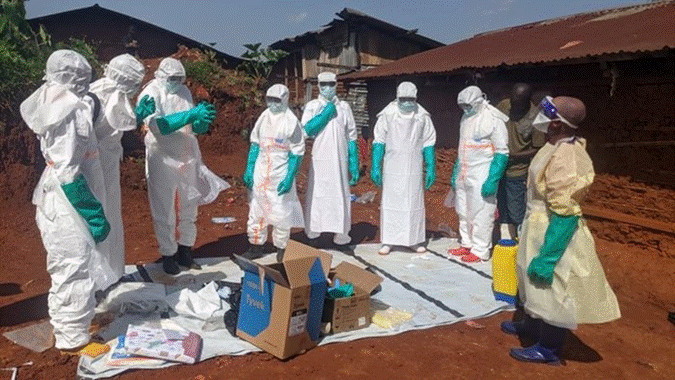
Ebola response team — COPAD and partner workers suiting up in PPE before a field intervention, eastern DRC
Urgent Priorities Identified on the Ground
COPAD’s assessment outlines several urgent priorities identified on the ground:
- Community awareness and risk communication
- Hygiene and sanitation support
- Strengthening local prevention measures
- Psychosocial support for affected families
- Epidemiological monitoring
- Support for vulnerable households
The Role of Community-Based Engagement
The organization also highlights the important role played by local community leaders, churches, health workers, and community volunteers in awareness-raising and prevention efforts. According to the assessment, community-based engagement remains essential in helping reduce fear, combat misinformation, and support prevention strategies within affected areas.
While national authorities, the World Health Organization (WHO), local health structures, and humanitarian actors are already mobilized, COPAD notes that many challenges remain — particularly in areas affected by insecurity and limited access to resources.
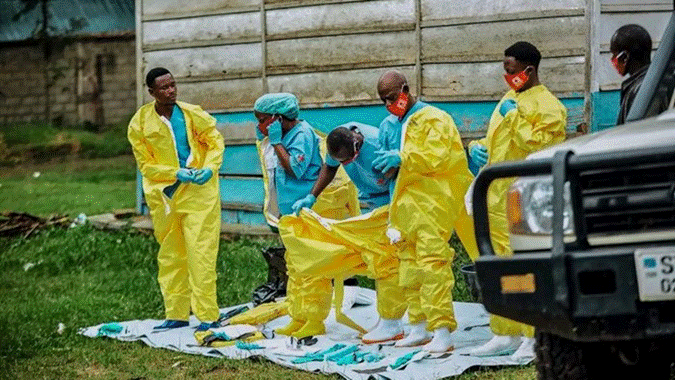
Health and humanitarian workers preparing protective equipment before an Ebola response deployment, eastern DRC
Why Local Voices Matter
This contribution from COPAD GRANDS-LACS offers an important reminder of the value of local humanitarian knowledge and community-rooted organizations working directly within affected communities. It also reflects the importance of listening to field-based perspectives and strengthening connections between organizations engaged in community resilience and humanitarian response across Africa.
As IFS Africa outreach and engagement efforts continue to grow, contributions such as these help create greater understanding of the realities faced by communities across the region — while also highlighting the experience, leadership, and resilience of local organizations working on the front lines.
About this contribution
This field contribution was written and brought to the IFS network by Junias Kanyinda, as part of the IFS Africa Outreach & Engagement initiative. It reflects COPAD GRANDS-LACS’s commitment to sharing field knowledge across the global IFS community.