EFS: The Euro-Mediterranean Regional Federation of IFS
Connecting Communities Across Europe and the Mediterranean
The Euromed Federation of Socio-Cultural and Neighborhood Centers, known as EFS, connects locally rooted organisations and representative networks across Europe and the Mediterranean.
EFS brings together settlement houses, neighbourhood houses, neighbourhood centres, community centres, socio-cultural centres and community organisations, together with the federations, associations and networks that represent them.
Established in October 2022, EFS strengthens cooperation between IFS members through shared learning, exchange, joint projects and advocacy for social justice, democracy, inclusion and community participation.
Our Relationship with IFS
EFS developed from the IFS regional network for Europe and the Mediterranean. It was subsequently established as a separate legal entity in France to support regional funding, partnerships, projects and administration.
EFS remains the Euro-Mediterranean regional federation of IFS Global Network. All EFS members must also be members of IFS, ensuring that regional cooperation remains connected with the global Federation’s mission, values and wider membership.
This structure enables EFS to pursue funding, enter partnerships and manage Euro-Mediterranean initiatives while strengthening relationships between IFS members across Europe and the Mediterranean.
EFS membership complements and does not replace membership of IFS Global Network.
Our Regional Purpose
EFS supports, promotes and represents socio-cultural centres, neighbourhood centres and other locally rooted community organisations across the Euro-Mediterranean region.
Its purpose is to:
- strengthen cooperation between IFS members across Europe and the Mediterranean
- build relationships between local organisations, national federations and representative networks
- create opportunities for meetings, exchanges and shared learning
- support the development of collaborative regional projects
- identify shared regional issues and bring them to the attention of IFS
- provide mutual support and share useful knowledge and resources
- promote social justice, democracy and community participation
- strengthen the collective voice of locally rooted organisations
- connect regional experience with wider IFS discussions and international advocacy
EFS recognises the diversity of countries, languages, cultures and approaches across the Euro-Mediterranean region. Its role is not to promote a single organisational model, but to provide a structure through which members can learn, cooperate and act together.
Areas of Regional Work
The work of EFS is shaped by the experience, knowledge and priorities of its members.
Areas of shared work may include:
- social and socio-cultural community work
- formal and non-formal education
- poverty and social exclusion
- community participation and local democracy
- children, young people and families
- ageing and intergenerational relationships
- migration, multiculturalism and belonging
- support for people and communities experiencing crisis
- youth participation and leadership
- community responses to environmental and social challenges
- organisational sustainability and leadership
- mobility, international exchange and cross-cultural learning
- advocacy at European and Euro-Mediterranean levels
These areas are not intended to limit the work of EFS. Regional priorities continue to develop through the participation of members, the General Assembly, the Board and collaborative projects.
Who Can Participate?
EFS membership is available to eligible local organisations, national federations, associations and representative networks across Europe and the Mediterranean.
All EFS members must also be members of IFS Global Network. This ensures that organisations participating in the regional federation remain connected with the global settlement-house, neighbourhood-centre and community-centre movement.
Eligible IFS members can participate in EFS without paying an additional EFS membership fee, subject to the Federation’s governing requirements.
Organisations interested in joining EFS should contact the Federation to:
- confirm their current IFS membership
- learn about EFS membership requirements
- receive information about meetings and activities
- connect with participating organisations
- explore opportunities for projects, exchange and advocacy
Cooperation, Learning and Exchange
EFS creates opportunities for members to build relationships and learn across national, cultural and organisational contexts.
Activities may include:
- regional meetings and General Assemblies
- member presentations and peer-learning sessions
- conferences and workshops
- study visits and professional exchanges
- youth exchanges and mobility activities
- sharing research, reports and practical resources
- joint project development
- collaborative funding applications
- working groups on shared regional issues
- participation in IFS global conferences and activities
Through these activities, members share community-based knowledge, explore different approaches and develop partnerships that strengthen both local and regional work.
Projects and International Cooperation
EFS supports collaborative projects that connect organisations and communities across Europe and the Mediterranean.
This work builds on established cooperation between IFS members, including mobility, training, non-formal education and international exchange.
From 2021 to 2024, the French Federation of Social and Socio-Cultural Centres coordinated the Erasmus+ IFS Fostering Social Justice project. The project encouraged European cooperation and explored how non-formal education, community participation and locally rooted organisations contribute to citizenship, democracy and social justice.
EFS activities during 2024 included conferences connected with Fostering Social Justice, the preparation of Erasmus+ funding applications and the welcoming of new members.
EFS continues to explore opportunities for:
- community and practitioner exchanges
- youth participation and mobility
- international learning
- joint project development
- shared funding applications
- cooperation between local organisations and national federations
Advocacy and European Engagement
EFS strengthens the collective voice of socio-cultural centres, neighbourhood centres and community organisations across the Euro-Mediterranean region.
Its advocacy seeks to bring locally grounded knowledge and community experience into regional and European discussions on:
- democracy and citizen participation
- social justice and human rights
- poverty and social exclusion
- migration and multiculturalism
- youth engagement
- non-formal education
- community development
- sustainable and inclusive neighbourhoods
EFS is listed in the European Union Transparency Register, supporting its engagement with European institutions and policy discussions.
Through the We’re Right Here initiative, participating organisations developed six policy recommendations that were brought to European institutions in late 2023 and early 2024. This work highlighted the contribution of locally rooted organisations to democracy, participation and social justice.
EFS also provides a pathway for Euro-Mediterranean perspectives to contribute to the wider advocacy and international engagement of IFS Global Network.
Governance and Regional Leadership
EFS has its own legal and governance structure, including a General Assembly and Board, while remaining connected to IFS Global Network through its membership requirements and regional role.
The General Assembly provides an opportunity for members to:
- review activities and finances
- shape regional priorities
- elect Board members
- develop projects and advocacy
- strengthen communication between members
- share knowledge and resources
- plan future cooperation
The second EFS General Assembly was held in Budapest in 2025, with participants joining in person and online from countries across the region.
The gathering reviewed EFS’s 2024 activities and worked on four areas of its strategic plan:
- collaborative project development
- advocacy
- communication with members
- exchange of experience and resources
Participants also visited a local social centre and learned about community-led work in a Budapest neighbourhood.
Recent Developments
Since its establishment in 2022, EFS has continued developing its membership, governance, regional partnerships and project activity.
Recent developments have included:
- regional conferences and learning activities
- Erasmus+ project development
- applications for collaborative regional funding
- engagement with European institutions
- new member participation
- development of youth exchange activities
- contributions to wider IFS conferences and initiatives
- stronger cooperation between organisations across Europe and the Mediterranean
The development of EFS has been supported by the commitment of founding members, national federations, local organisations, volunteers and regional partners.
The French Federation of Social and Socio-Cultural Centres played a leading role in establishing EFS, building on its involvement in IFS and its experience in European cooperation, mobility and non-formal education.
How Members Participate
EFS and IFS members can contribute to the regional federation by:
- joining General Assemblies, meetings and regional conversations
- sharing news, resources and examples of community practice
- participating in study visits, conferences and exchanges
- contributing to working groups and collaborative projects
- suggesting regional issues for discussion or advocacy
- supporting funding applications and project development
- connecting with organisations working on similar priorities
- contributing as speakers, facilitators or project partners
- bringing Euro-Mediterranean perspectives into wider IFS discussions
- helping build relationships with organisations and countries not yet actively represented
Members are encouraged to share their experience, identify opportunities for cooperation and help shape the future direction of the regional federation.
EFS News and Activities
EFS members are involved in meetings, projects, advocacy, international exchanges and community-based initiatives across Europe and the Mediterranean.
News and activity updates may include:
- General Assemblies and governance updates
- member projects and partnerships
- conferences and workshops
- youth exchanges and mobility programs
- advocacy and policy engagement
- funding and partnership opportunities
- reports, publications and learning resources
- contributions to IFS global activities
Contact EFS
To learn more about EFS, confirm membership eligibility, connect your organisation or participate in regional activities, contact:
Email: efs@centres-sociaux.fr
EFS Leadership
EFS is guided by its elected Board and officeholders.
President: Patricia Brenner
Secretary: Annamaria Georgies
Additional Board and leadership information can be added once the current positions following the 2025 General Assembly are confirmed.
-
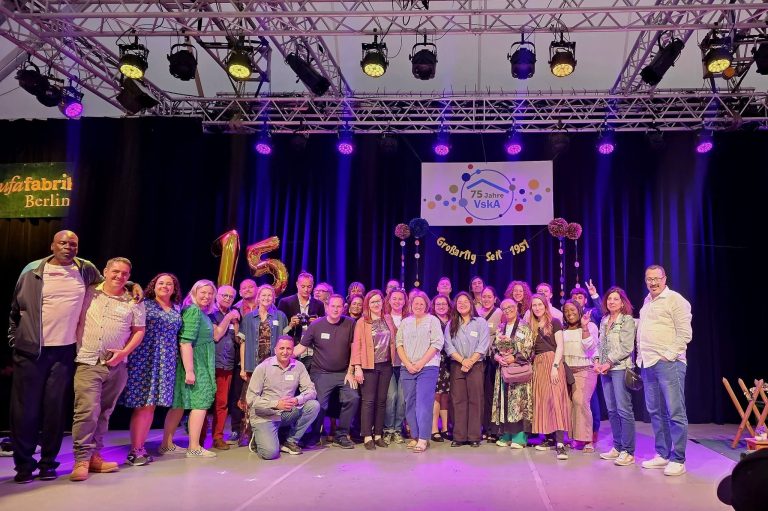
75 Years of Community, Participation and Neighbourhood Action: Celebrating VskA’s Legacy and Future
In June 2026, delegates gathered in Berlin to celebrate the 75th anniversary of Verband für sozial-kulturelle Arbeit e.V. (VskA). This milestone highlighted three-quarters of a century of neighbourhood action, democratic participation, and international exchange, reflecting on the post-war origins and future of community work across Germany and globally.
-
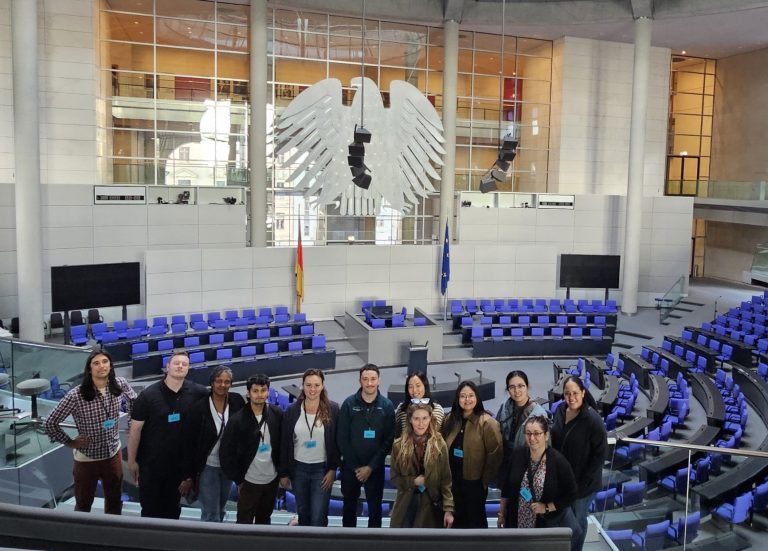
Building Connections Across Borders: The 2026 Berlin International Exchange
In June 2026, community, neighbourhood, child and youth sector leaders from Australia, Canada, the United States and Germany came together in Berlin for an international professional exchange exploring advocacy, youth work, community development, civic participation and social inclusion. While international exchanges have long been a valued part of the settlement house, neighbourhood centre and community…
-
Blog | IFS Euromed | News
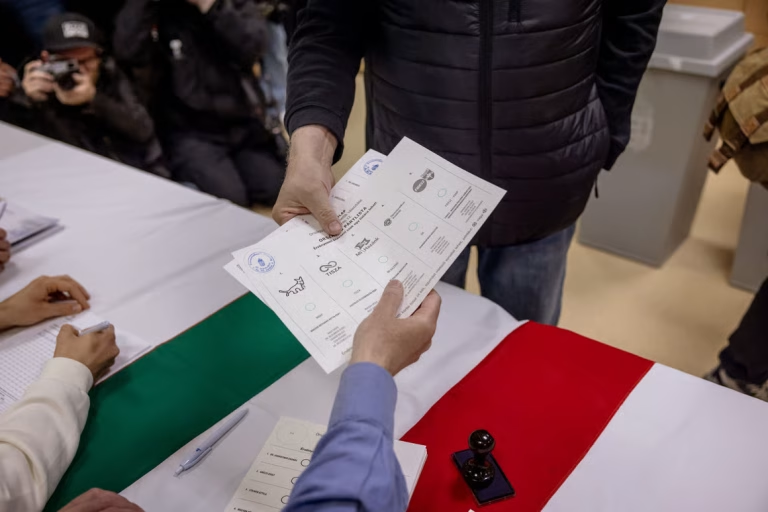
IFS Celebrates Historic Voter Turnout and Democratic Renewal in Hungary
The International Federation of Settlements and Neighborhood Centers (IFS) celebrates the record-breaking voter turnout in Hungary’s recent election, which marked a pivotal shift in the nation’s leadership. With 77.8% of eligible voters participating, this election represents the highest turnout in Hungarian history and a resounding call for democratic renewal. The election results bring a new…