A Century of Global Connection and Local Action
From the origins of the settlement movement to one hundred years of international cooperation through IFS.
The story of the International Federation of Settlements and Neighbourhood Centres predates the Federation itself.
IFS grew from the settlement movement, an international tradition of neighbourhood-based organisations that work alongside communities to address poverty, inequality, exclusion and social change.
As settlement houses and neighbourhood centres, or community Centres, developed in different countries, their leaders recognised the value of sharing knowledge, building relationships, and acting together across borders. In 1926, these international connections led to the establishment of a global federation.
Today, IFS connects and strengthens this worldwide movement. In 2026, we mark one hundred years of international cooperation while continuing the settlement movement’s longer tradition of locally rooted action, community participation and social change.
One Movement, Two Connected Histories
To understand the history of IFS, we need to explore two connected stories.
The Settlement Movement is the wider international tradition from which settlement houses, neighbourhood centres and community-based organisations developed.
The IFS Global Network is the international federation established in 1926 to connect this movement across countries, strengthen cooperation and encourage shared learning and collective action.
Together, these histories show how locally rooted organisations became part of a global movement for stronger, more inclusive and more equitable communities.
Part One: The Settlement Movement
The Movement That Came Before the Federation
The settlement movement emerged during the late nineteenth century, a period of rapid industrialisation, urban growth and migration. In many cities, these changes created new opportunities but also contributed to overcrowded housing, unsafe working conditions, poverty and widening divisions between social classes. Settlement houses developed as local responses to these challenges.
The movement took its name from the idea that people involved in education and social reform would “settle” in a neighbourhood, living and working alongside local residents. Early settlement houses created places where people could meet, learn and organise. Their activities included education, childcare, health and legal assistance, arts and recreation, public debate and practical support for families.
The establishment of Toynbee Hall
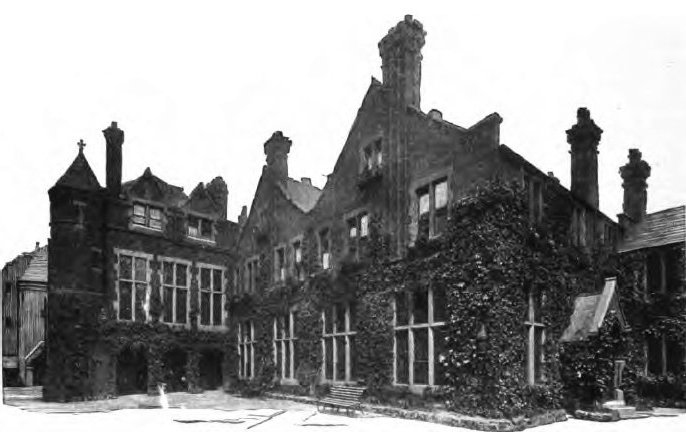
Toynbee Hall, widely recognised as the first university settlement house, opened in the East End of London in 1884. It was established by Henrietta and Samuel Barnett and named in memory of their friend, historian and social reformer Arnold Toynbee. Their vision was to create a centre where people from different social backgrounds could meet, learn from one another, study the causes of poverty and develop practical responses to inequality.
Toynbee Hall became a place for education, social research, public discussion and reform. University students and graduates lived and volunteered in the surrounding neighbourhood, gaining direct knowledge of the conditions experienced by local communities. This combination of practical service, learning and advocacy became influential well beyond London.
A movement spreads internationally
The settlement idea soon travelled across borders, with each new settlement adapting its work to the circumstances of its community. University Settlement was established in New York in 1886, and Jane Addams and Ellen Gates Starr opened Hull House in Chicago in 1889 after visiting Toynbee Hall.
Hull House developed alongside the immigrant communities of Chicago’s Near West Side. It provided educational, cultural and practical programs, including childcare, employment assistance, language and citizenship classes, libraries, art, music and theatre. Its residents and community members also campaigned for improved housing, public health, workers’ rights, women’s rights, child-labour protections and juvenile justice.
Settlement organisations subsequently developed across Europe, North America, Asia and other parts of the world. Although they shared some common principles, they did not all follow a single model. Their work was shaped by local cultures, political systems, community priorities and experiences of industrialisation, migration and inequality.
From service to participation and social change
The early settlement movement contained tensions that should be acknowledged. Many early settlement workers came from comparatively privileged backgrounds, and some approaches reflected the charitable, moralistic or paternalistic attitudes of their time. The relationship between settlement workers and the communities around them was not always equal.
At the same time, settlement houses helped advance the idea that poverty and disadvantage were not simply individual problems. They drew attention to the influence of housing, employment, education, sanitation, discrimination and public policy. Many became places where local experience informed social research, public advocacy and campaigns for reform.
Over time, the movement continued to evolve. Greater emphasis was placed on working with communities rather than for them, supporting participation, local leadership, shared decision-making and collective action. This evolution helped shape modern approaches to social work, community development, neighbourhood centres and community-led advocacy. The Hull-House Museum describes this central aspiration as living “with,” rather than “for,” other people.
Today, settlement houses, neighbourhood centres and community organisations operate in many different forms. Their programs respond to local needs, but they remain connected by an enduring belief: strong communities are built through relationships, participation, shared knowledge and action for social change.
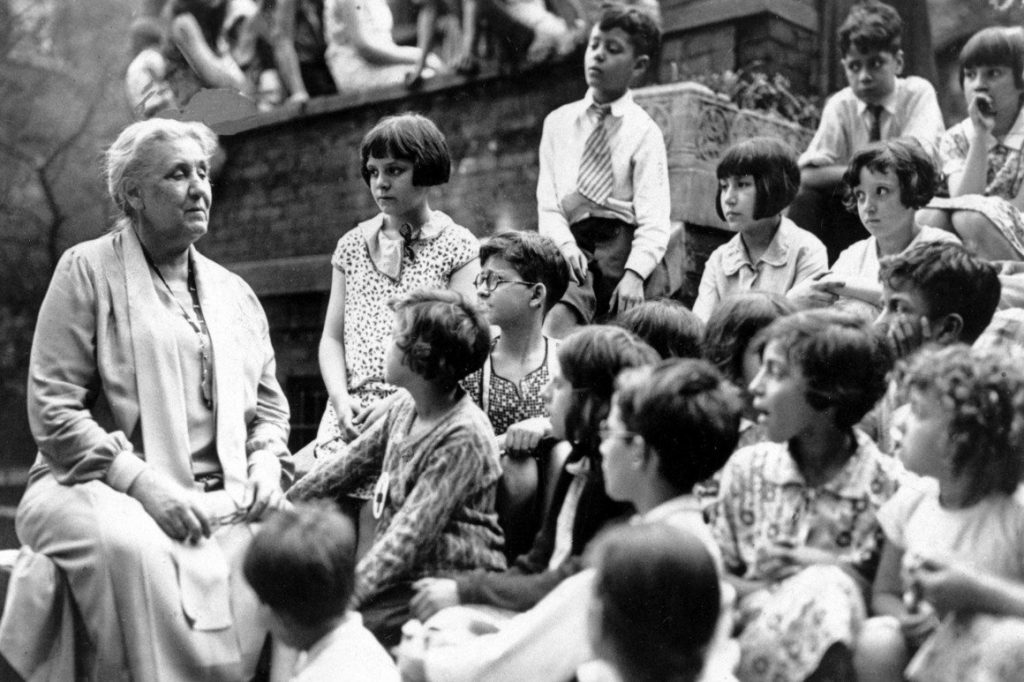
“A Settlement is above all a place for enthusiasms, a spot to which those who have a passion for the equalization of human joys and opportunities are early attracted.“
Jane Addams, Twenty Years at Hull-House
Different Names, A Shared Tradition
Across the world, organisations within and connected to the settlement movement use different names. These include settlement houses, neighbourhood houses, neighbourhood centres, community centres, social centres and other locally recognised terms.
These names reflect different histories, cultures and systems of community work. Some organisations continue to identify strongly with the settlement tradition, while others use language that is more familiar within their own countries and communities.
Their structures and activities also vary. Some provide services and programs, while others focus on community development, education, advocacy, cultural activity, social connection or local organising. Many combine several of these roles.
IFS respects this diversity of language and practice. What connects the global network is not a single name or organisational model, but a shared commitment to locally rooted work, participation, inclusion, learning across borders and communities having a voice in the decisions that affect them.
Different names. Different local contexts. A shared commitment to stronger communities.
Transition to the IFS story
As the settlement movement spread, relationships developed between practitioners, community leaders and organisations in different countries. They exchanged ideas, visited one another’s settlements and recognised that the social issues affecting local communities frequently extended beyond national borders. Toynbee Hall’s historical archive records that the settlement model inspired an international movement and later hosted meetings of the International Federation of Settlements.
These growing international connections created the foundation for a more formal global network.
In 1926, representatives of the settlement movement came together to establish an international federation, beginning the second part of our story: the history of the IFS global network.
- 1884: Henrietta and Samuel Barnett open Toynbee Hall in London.
- 1886: University Settlement is established in New York.
- 1889: Jane Addams and Ellen Gates Starr open Hull House in Chicago.
- 1899 — The First Continental European Settlement: Ons Huis (“Our House”) opened in Amsterdam, Netherlands, becoming the first settlement house in continental Europe and demonstrating how the model adapted outside the English-speaking world.
- 1901 — First Settlement in Asia: Kingsley Hall and subsequent neighborhood initiatives began spreading the settlement concept into Asia (such as the settlement movement in Japan starting with Alice Mabel Bacon and Sen Katayama at Kingsley Hall in Tokyo).
- 1911 — Establishment of National Federations:The National Federation of Settlements (NFS) was formed in the United States (co-founded by Jane Addams), establishing the model of national umbrella bodies that eventually formed the backbone of the international federation in 1926.
- Late nineteenth and early twentieth centuries: Settlement organisations develop in different countries and adapt to local communities.
- 1926: International relationships within the movement lead to the formation of the global federation.
Part Two: The IFS Global Network
Connecting the Settlement Movement Across Borders
By the early twentieth century, the settlement movement had become international. Although settlement houses and neighbourhood centres responded to different local circumstances, they shared a belief in the value of community relationships, practical action and social reform.
Leaders and practitioners increasingly saw that organisations in different countries could learn from one another. International cooperation offered a way to exchange knowledge, strengthen practice and develop shared responses to the social challenges affecting communities.
The first international conference
In 1922, representatives gathered at Toynbee Hall in London for the first International Conference of Settlements. The relationships and structures developed through this gathering contributed to the establishment of the International Federation of Settlements in 1926.
The conference expressed a belief that settlements throughout the world were part of a wider movement. Participants recognised that the success of one settlement could contribute to the progress of others and that settlements should remain connected, exchange information and learn from their different experiences.
A Continuation Committee was established to maintain relationships between settlements in different countries, encourage the exchange of information, support personal connections between practitioners and prepare for a further international conference.
This committee provided an early organisational foundation for the international network that followed.
The establishment of the Federation
The next major gathering took place in Paris in 1926, when representatives attended the second International Congress of Settlements. A surviving invitation records that its inaugural session was held on 30 June 1926 at the University City in Paris.
The international relationships developed through these conferences led to the establishment of the International Federation of Settlements in 1926.
The new Federation created a continuing structure through which settlement organisations could:
- exchange knowledge and experience
- strengthen relationships across countries
- support the development of settlement work
- encourage international visits and cooperation
- advance shared commitments to social reform
- connect local community action with international dialogue
Local Work, International Solidarity
The establishment of the Federation reflected a principle that continues to guide IFS: community organisations are most effective when they are deeply connected to their local communities, but they do not need to work in isolation.
Through the international network, settlement houses and neighbourhood centres could share practical approaches, learn how communities in other countries were responding to change and build solidarity around common challenges.
The methods used by settlement organisations varied between countries. However, the Federation provided a place where members could explore the values and aspirations connecting their work. These included participation, inclusion, education, cooperation, human dignity and action for social change.
International conferences became an important part of this work. They brought people together to examine emerging social issues, exchange community-based knowledge and strengthen relationships across national and regional boundaries. IFS records describe a history of international conferences extending back to the first gathering in 1922.
From Local Communities to the United Nations
As international institutions developed following the Second World War, IFS created opportunities for the knowledge and experience of settlement organisations to contribute to global discussions.
Since 1998, IFS has held consultative status with the United Nations Economic and Social Council. Its areas of engagement recorded by the United Nations include social development, human rights, poverty, migration, education, housing, gender equality, youth, ageing and sustainable development.
This international role connects two levels of action:
- local action, grounded in the knowledge, priorities and experiences of communities
- global advocacy, bringing community perspectives into international discussions and institutions
This connection between the local and the global remains central to IFS.
Pioneering Policy & Shaping Public Services
Beyond localised support, early settlement houses served as “research laboratories” for social reform. By collecting data on neighbourhood conditions, settlement workers pushed governments to take responsibility for public welfare.
Many baseline government policies—such as child labor laws, public health regulations, housing safety standards, juvenile justice systems, and early childhood education—began as settlement house initiatives before being adopted into state and national law.
As governments expanded social welfare systems throughout the 20th century, settlement houses evolved into modern community and neighbourhood centres, acting as vital local partners that bridge government policy with grassroots community needs.
A Network That Continues to Evolve
Over the decades, IFS has adapted as communities and social conditions have changed. The language, structures and methods of settlement work have continued to evolve, but the need for international cooperation has remained.
Today, the Federation connects settlement houses, neighbourhood centres, community organisations and their national and regional networks. Members exchange ideas, develop relationships and work together on challenges that may be experienced locally but are shared internationally.
In its centenary year, IFS continues the work begun by settlement representatives who came together in the 1920s. Their central insight remains relevant:
Local organisations can achieve more when they learn from one another, build relationships across borders and act together for social change.
Key Moments in the IFS Global Network
1922: The First International Conference
Settlement representatives gather at Toynbee Hall in London for the first International Conference of Settlements. A Continuation Committee is established to maintain international relationships, exchange information and prepare for a future international gathering.
1926: The International Federation Is Established
The second International Congress of Settlements meets in Paris. The relationships and organisational structures developed through the international conferences lead to the establishment of the International Federation of Settlements.
1940s–1950s: Post-War Reconstruction & Global Expansion
Following World War II, member settlements played a vital role in community rehabilitation, refugee assistance, and post-war social reconstruction across Europe, while expanding international linkages into Latin America, Africa, and Asia.
1952 — Post-War International Conference in Amsterdam:
The 6th International Conference of Settlements was held in Amsterdam, focusing on post-WWII social recovery, youth work, and building democratic neighborhood centers in rebuilt European cities.
1976 — Golden Jubilee (50th Anniversary) in London:
IFS celebrated 50 years of international cooperation back in London, formalizing a broader effort to include grassroots community centers across the Global South and expanding beyond Western Europe and North America.
1998: In 1998, IFS was officially granted Special Consultative Status with the United Nations Economic and Social Council (ECOSOC).
This landmark milestone formalised decades of grassroots advocacy, giving local neighbourhood centres a direct voice in global policy discussions on human rights, poverty reduction, gender equality, and sustainable development.
2016: Migration and Belonging in Berlin
In late September, IFS holds its biennial international conference in Berlin, Germany, under the theme “On the Move: At Home in the World.”
The conference examines migration, displacement and the challenges of welcoming and supporting refugees. Participants visit Berlin neighbourhood houses involved in refugee settlement and community-building, including services assisting newly arrived people and creating spaces for dialogue between different groups within local communities.
The conference demonstrates the important role of settlement houses and neighbourhood centres in supporting inclusion, connecting people with services and helping communities respond to migration with dignity and solidarity.
2018: Democracy in Focus in Helsinki
Settlement and neighbourhood-centre representatives from around the world gather in Helsinki, Finland, for the IFS International Conference under the theme “Democracy: Is It in Danger?”
The conference examines the condition of civil society and democracy internationally. It leads to the presentation of the IFS Declaration on Democracy, affirming a vision of democracy founded on human rights, diversity, participation and the dignity and worth of all people.
2021: The First Virtual IFS Conference
From 14 to 17 September, LCSA hosts the Sydney IFS Conference in partnership with the Australian Neighbourhood Houses and Centres Association.
Originally planned as an in-person gathering, the conference moves online because of the COVID-19 pandemic and international travel restrictions. It becomes the first virtual IFS international conference, connecting hundreds of delegates from around the world with more than 100 speakers and presenters.
Under the theme “Social Justice: The Unfinished Journey, Global Issues, Local Solutions,” participants explore social justice and the contribution of settlement houses, neighbourhood centres and community organisations to shared global challenges.
2023: Democracy and Social Justice in Lille
From 11 to 14 May, nearly 100 IFS participants from different countries and continents gather in Lille, France, for the IFS International Conference.
Held in conjunction with the congress of the French Federation of Social Centres, the conference explores the theme “Democracy and Social Justice” through workshops, presentations, governance meetings and international exchange.
2025: The IFS Host Office Moves from Finland to Australia
Responsibility for the IFS host office transfers from the Finnish Federation of Settlements to the Local Community Services Association in Sydney, Australia.
The transition begins a new organisational chapter for the Federation and recognises the Finnish Federation’s years of stewardship and service to the global network.
2025: Centenary Celebrations Begin in the United Kingdom
IFS commences its centenary celebrations with an international gathering hosted in partnership with Locality in the United Kingdom.
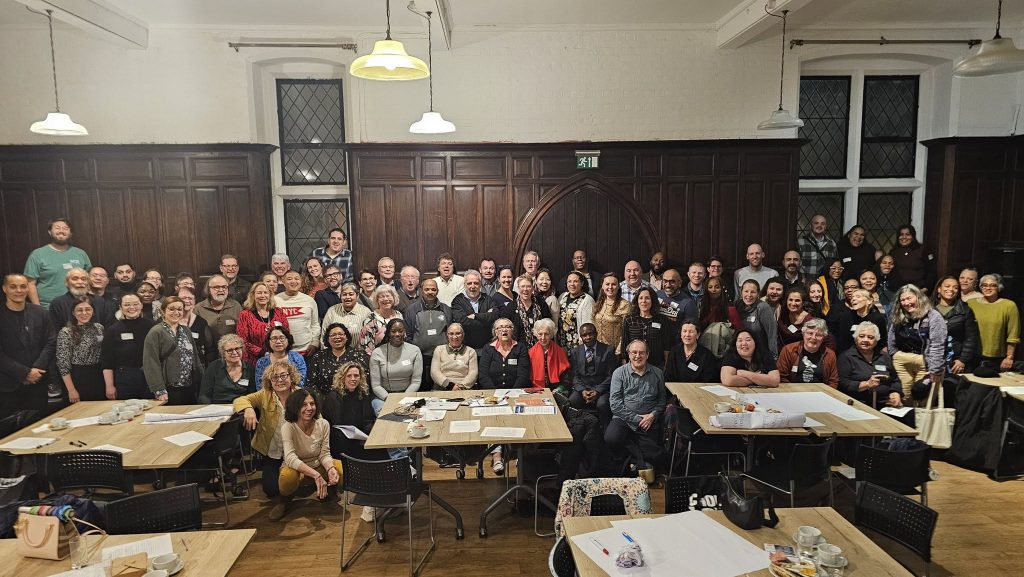
IFS delegates meet in London before joining the Locality Convention in Liverpool. The gathering brings together settlement, neighbourhood and community practitioners to reflect on the Federation’s history, strengthen international relationships and look towards its next century.
More than 120 international delegates participate in the IFS gathering in London, followed by engagement with approximately 400 United Kingdom delegates through the Locality Convention.
The gathering marks the beginning of the journey towards the 100th anniversary of IFS in 2026.
2026: One Hundred Years of IFS
IFS marks one hundred years since the establishment of the International Federation in 1926.
Building on the centenary celebrations commenced in the United Kingdom in November 2025, the anniversary provides an opportunity to honour the people, organisations and communities that shaped IFS and to look towards the future of the global network.
A Century of Connection, A Future of Possibility
The history of IFS is not only the history of an organisation. It is the story of relationships built across countries, of knowledge shared between communities and of people working together in pursuit of greater equality, participation and social justice.
From the first international gathering at Toynbee Hall in 1922 to the centenary of the Federation in 2026, IFS has provided a place where locally rooted organisations can connect across borders. Its history has been shaped by settlement workers, community leaders, volunteers, member organisations, national federations, regional networks and the communities at the heart of their work.
The Federation has changed as the world around it has changed. Its structures, language and methods have evolved, but its central purpose remains clear: to connect people and organisations working locally and strengthen their capacity to contribute to change internationally.
As IFS enters its second century, its history offers both a foundation and a challenge. The Federation must continue learning from its members, welcoming new voices, strengthening participation and ensuring that community knowledge informs responses to shared global challenges.
The next chapter of IFS will be written by the people and communities who continue this work.
Rooted in communities. Connected across borders. Building the future together.
Help Us Complete the IFS Story
The history of IFS lives in the records, photographs and memories of its members around the world.
As we continue developing our centenary history, we invite IFS members, former officeholders, host organisations and friends of the Federation to contribute:
- conference programs and proceedings
- annual reports and newsletters
- photographs and recordings
- correspondence and meeting records
- information about former host offices
- regional and national histories
- personal recollections of IFS events and activities
These contributions will help preserve the history of the global network and ensure that the people, organisations and communities that shaped IFS are properly represented.
The Continuing Value of the IFS Network
For a century, the strength of the IFS network has been defined by the real-world impact felt by its member organizations and the local communities they serve. Here is what our global partners say about the value of international cooperation:
Inspired !
Inspired by what folks were doing specifically around civic engagement and equity, we had the chance to reflect on our work collectively at the IFS conference in Lille. This opportunity has led to enhancing our services and programs

IFS has changed the culture of our organization for the better
Full membership in IFS has changed the culture of our organization for the better by far. Riis Settlement is now part of an international network—a movement, in fact—that offers us peer learning and support from practitioners worldwide.