
REFLECTION · INTERNATIONAL PRACTICE
When International Belonging Is Invisible
A question the Settlement movement rarely asks out loud.
This piece is about belonging. Not the kind that lives in membership lists, but the kind that must be felt.
By Junias Kanyinda · International Federation of Settlements
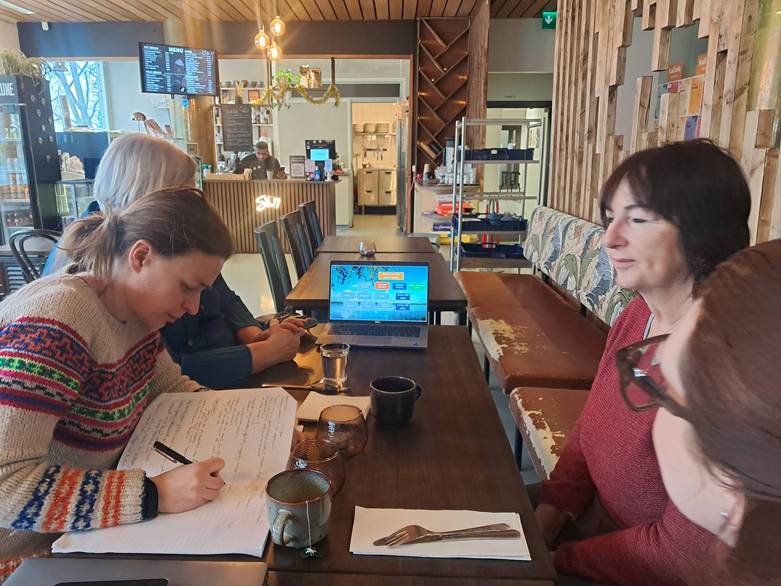
Helsinki, Finland. Practitioners from the UK and Finland at the end of a long, thoughtful day.
We were at the end of a long day. The kind where the conversation has already done its work and what’s left is something quieter, coffee cups cooling on the table, chairs pulled a little closer than they’d been that morning.
Our visitors from the UK had spent the day moving through Finnish Settlement Houses. They’d listened carefully, asked thoughtful questions, and noticed both the familiar and the foreign. Annie Davy and Makena Löhr, co-founders of Flo’s – The Place in the Park in Oxford, had come to Finland as part of an international learning exchange, curious practitioners, generous with their own experiences, genuinely interested in how community work travels across borders.
At one point, almost in passing, one of them said:
“I didn’t even know the International Federation of Settlements existed.”
There was no criticism in her voice. No embarrassment. Just genuine surprise, the kind that arrives quietly and then stays in the room.
For a moment, no one spoke.
What made the sentence linger wasn’t the remark itself. It was who it came from. She works in partnership with a national organisation that has long been part of the international federation. She is thoughtful, curious, engaged, exactly the kind of practitioner international networks exist to connect. And yet, the body meant to link this work across countries had never once crossed her path.
I have been thinking about that moment ever since.
— — —
For nearly nine years, I worked in communication, advocacy, and international coordination for the International Federation of Settlements. I believed, and still believe, in its role as a bridge. I believed that international belonging could offer something quietly powerful to local practitioners: perspective, solidarity, the simple but meaningful knowledge that you are not working alone.
But again and again, I noticed the same thing.
Local workers doing extraordinary, demanding, deeply human work often had no idea they were part of an international movement at all.
This raises an uncomfortable question, one we rarely ask out loud.
What does it mean when the people doing the work don’t know they belong to something bigger?
— — —
This is not a question about branding. Not about logos or websites or membership lists.
It is a question about felt belonging. And those are different things.
I have watched it happen many times during international visits. Local colleagues engage fully. They exchange stories, ask sharp questions, and reflect honestly on their own practice. And then the conversation turns to the international federation, and something shifts. A slight pause. A look that says: ” This is the first I’m hearing of this.
For some, the realisation that their organisation belongs to an international network comes during the visit itself. Not before. Not through any channel intended to carry it.
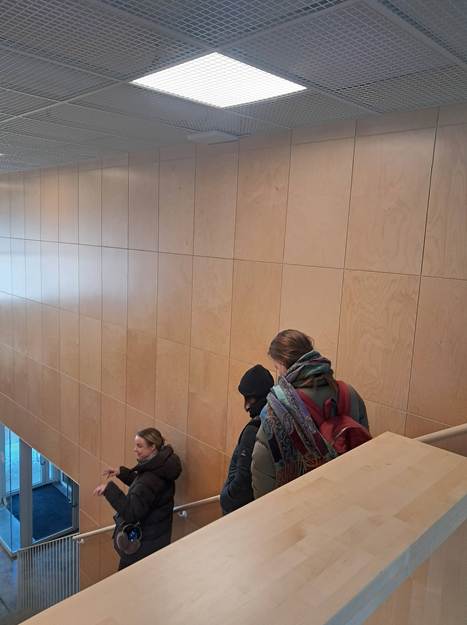
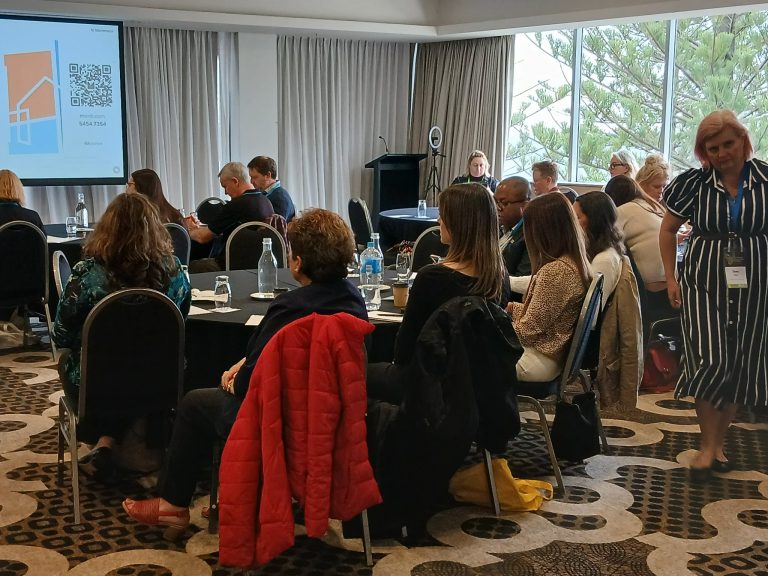
Moving through spaces, between floors, between countries. The visit as a moment of connection and discovery.
So, what is lost when international belonging stays invisible?
Not in the abstract. Concretely.
Somewhere, a community worker in one country is navigating a funding crisis that a colleague three borders away solved two years ago. But that story never travelled. Somewhere, someone is redesigning a programme from the ground up, not knowing that a very similar model already exists, has already struggled, and has already learned. Somewhere, a person is carrying the particular loneliness of work that feels too local to matter beyond its own street, not knowing that what they do is recognized, named, and valued in rooms they have never been invited into.
That’s what stays behind when international belonging is only formal.
Not a missed conference. Not an unread newsletter. Something more like a hand on the shoulder that never arrived.
— — —
I don’t think this is anyone’s fault.
Not the local workers, who are already carrying too much. Not the national organisations, operating under their own constraints. Not the international bodies, functioning with limited resources and high expectations, often dependent on formal representation structures that, by design, speak more easily to leadership than to the person running a Tuesday afternoon drop-in.
But I do think it is worth naming.
International structures that are not experienced at ground level exist in a kind of partial reality. They matter in documents, in meetings, in formal representation. And they may matter enormously at that level. But if they stop there, something is missing.
The question is not whether international solidarity is real. I believe it is. The question is whether it is felt by the people it most directly exists to serve.
— — —
Does the federation feel like a distant roof, or like a living room someone can actually step into?
Do community workers recognise themselves in the international story?
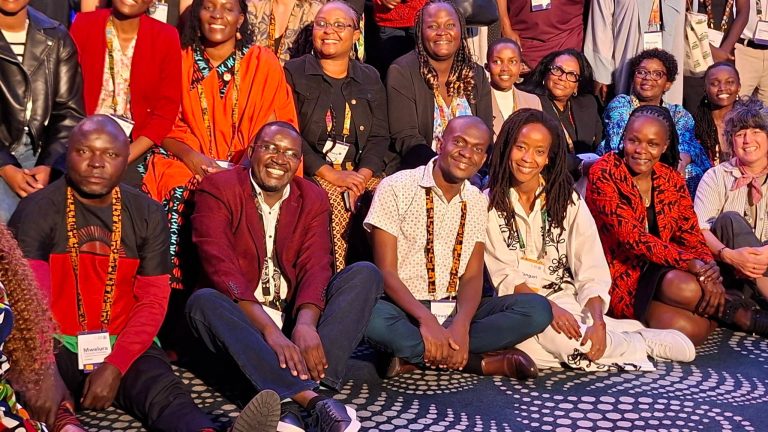
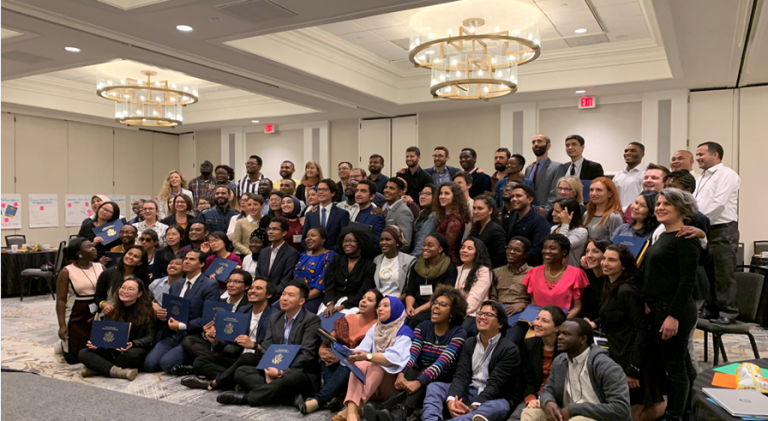
I think of the visits I have been part of, the moments when practitioners from different countries sit around the same table, and something clicks. When a story from Oxford resonates in Helsinki. When a challenge that felt local turns out to be shared. In those moments, the idea of an international movement stops being abstract. It becomes real in the room.
Those moments matter. But they are still too rare and too dependent on who happens to be in the room.
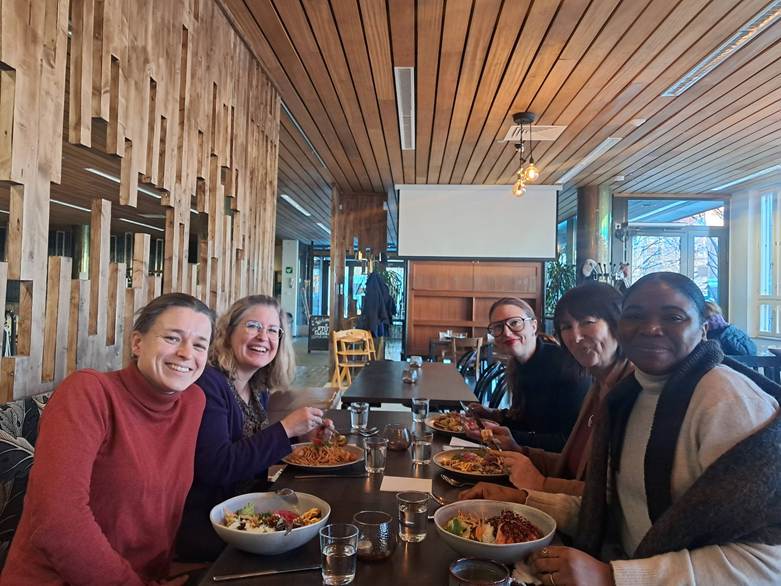
When practitioners from different countries sit around the same table, something clicks. Helsinki, Finland.
What if the work ahead is not about expanding structures, but about deepening relationships? About finding ways for international networks to listen downward as much as they speak upward? About creating spaces where local practitioners can recognise themselves in the international story, without having to carry the full weight of international engagement to do so?
I don’t have answers. Only a growing sense that this question matters more than we often make space to ask.
If we believe in international solidarity, it cannot live only at the top.
It has to be known, in some way, even a small way, by the people doing the work on the ground.
An Invitation to Reflect
This is not a conclusion. It’s a starting point.
Across countries and contexts, community workers, national organisations, and international networks are all navigating change, pressure, and limited resources. In that reality, questions of belonging are not secondary. They shape how networks live, and whether they do.
Do the people working in your local organisation know they are part of an international network? If yes, what does that belonging actually offer them? If not, what might be missing, or assumed?
And perhaps most simply: how could an international connection feel like something close, rather than something distant?
International solidarity doesn’t only live in structures. It lives in recognition, in relationships, in the quiet sense that your work is seen and connects to something larger than itself.
We welcome any reflections this stirs.
Junias Kanyinda
Regional Outreach & Engagement Coordinator
IFS North America & Africa Regional Networks